Showing posts with label electric cars. Show all posts

Friday, January 8, 2016

"Market Forces" Aren't Boosting SUVs - Congress is Subsidizing Them

driving in the land of giants

With gas prices plummeting below $2 a gallon, SUV and pickup sales are skyrocketing while sales of fuel-efficient and electric cars stall. The conventional wisdom among auto writers is that greenie efforts to cut gas consumption are failing in the face of the Free Market:
It’s the classic battle between market forces and regulators. [...]

Even if you’re a die-hard green car person—or at the very least, someone who sees the long-term value in weaning cars off fossil fuels, as I certainly can—you can see what a tough situation this is for automakers. Standards are forcing them to make cars that people may not necessarily buy, and that they may not necessarily profit from. But what’s the alternative, the government backs off on making cars more efficient? That’s not likely to happen anytime soon.
It is completely false to call this a battle between “market forces and regulators.” The free market hasn’t kept the gas tax artificially low - Congress has done that.

Congress hasn't raised the federal gas tax in more than 20 years. Since it's a set rate of 18.4 cents a gallon that's not indexted to inflation, the tax has effectively fallen 34 percent since 1993. It’s now totally insufficient even to cover the costs of building & maintaining highways, never mind the social costs of burning gas, from local air pollution to global warming.

That low gas tax acts as a subsidy for SUVs and a disincentive for buying electric cars, one it has nothing to do with the free market and everything to do with oil companies’ friends in Congress.

On top of that, the Obama administration has adopted a drill baby drill stance, with active US oil rigs more than doubling under his watch. Again - regulators, not "market forces," putting a thumb on the scale for flooding the market with cheap gas.

Friday, July 5, 2013

Ask The Green Miles: Are Smart Cars the Greenest Choice?

Ning & Smart Girl
The quintessential auto show picture
When folks ask me for advice on car-buying, they almost always bring up Smart Cars. They're so small, they must be the most fuel efficient, right?

But smallest size doesn't necessarily mean the best fuel efficiency. Sure, the Smart ForTwo gives you a really good 36 miles per gallon combined city/highway at a very low base price. But a nice gas-sipping subcompact - say, a Ford Focus or a Toyota Yaris - will give you very similar fuel efficiency (low 30s) with TWICE the passenger volume for only a couple of thousand more.

If you're a short-to-medium distance commuter, all-electrics like the Ford Focus Electric or Nissan Leaf will deliver absolutely amazing savings on fuel cost and pollution. And for folks who regularly make longer drives and need a hybrid, the Toyota Prius is still king.

The Environmental Protection Agency's FuelEconomy.gov gives a great rundown of the most fuel-efficient cars, along with the most and least fuel-efficient SUVs and trucks.

That brings me to a related pet-peeve: When people think I'm reflexively anti-SUV. Yes, if you're a single person driving a Chevy Suburban because you might go skiing once next year, you're wasting money and polluting our air for absolutely no reason. But if you need some room for your family, get a Toyota Highlander Hybrid and you'll be getting only somewhat worse mileage (28 mpg combined) than those Smart Car drivers.

Monday, May 30, 2011

New Nissan Leaf Ad: Electric Cars = Common Sense

This new ad for the Nissan Leaf turns the conventional wisdom surrounding electric cars on its head. Is it really such a revolutionary idea to run our cars on electricity when we rely on so many gadgets we wouldn't power with anything else?

Tuesday, December 14, 2010

Coming Soon: Best. Cars. Ever.

Like most treehuggers, The Green Miles acts insufferably indifferent when it comes to cars. TheGreenMilesMobile is now in its 12th year of getting great gas mileage & with 124,000 miles on it, the next time it needs a costly repair I'll probably just sell it to scientific experiment.

But recently I needed a car for my drive to Danville to campaign for Rep. Tom Perriello & ended up with a new Ford Focus from the rental agency down the street. Much as I like to maintain my veneer of vehicular insouciance ... it was a flippin' sweet ride. Fun to drive AND incredible gas mileage.

And now it's poised to get even better. Next year, an electric Ford Focus that gets 100 miles to the charge will be available, ideal for DC drivers like me who make almost all of our trips within 25 miles. Ford is also literally stuffing it with greenness:
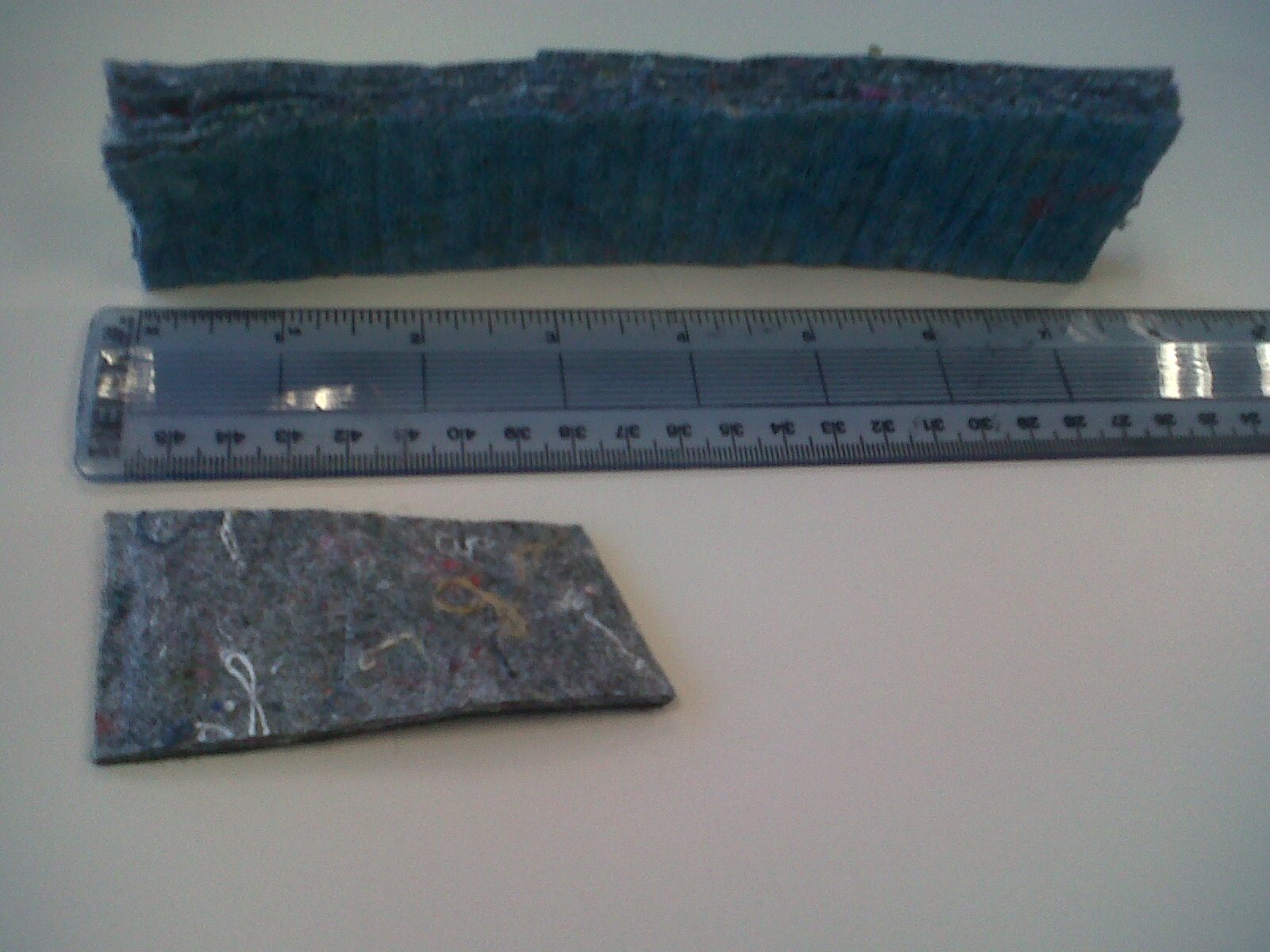
Ford vehicles continue to become more eco-friendly through the creative use of renewable and recycled materials. For instance, one of the clothing materials used in the next-generation Focus is post-consumer cotton that comes from recycled blue jeans.

"The good news is these jeans didn’t end up in a landfill, nor did we use the water, fertilizer and land to grow virgin cotton," Majeske said. "It’s an alternative that our customers can appreciate, it’s cost effective, and it’s better for our planet. These are the kinds of sustainable solutions we are looking for in all our vehicles."
Here's a look at that recycled blue jean material:

The electric Ford Focus is part of a new wave of cars designed to save you money at the gas pump (or eliminate your need for oil altogether):
I'm still planning to stick to a car-free diet once TheGreenMilesMobile has run down the curtain & joined the choir invisible. But if I do find myself needing new wheels, it's awfully nice to know that automakers are listening to our demand for greener cars.

Saturday, February 7, 2009

(Unclear on the) Concept Cars

The Green Miles got invited to check out the Washington Auto Show’s media day this week. Just off the main corridor at the Washington Convention Center was the Auto Show’s “green room.” It held dozens of cars ranging from concept solar cars to plug-in electrics.

The “green room” stood out, but not in the way they wanted. It was incredibly boring – while the main showrooms had colorful carpets, bright lights, and huge flat-screen TVs, the green room had beige walls, dull green carpet, and cardboard signs. Snark aside, it was good to see the auto industry rolling out new hybrids and electric cars – and even better that so many hybrids share space on the main floor with regular models.

But as I walked past the biodiesel SUVs, the propane-powered cars and the funky-looking solar racers, I wondered if the industry realized we don’t need futuristic new breakthroughs. We have the technology right now to cut our bills at the gas pump, slash America’s dependence on foreign oil, and reduce our greenhouse gas and air pollution. The question is, are we willing to pay a little more for cars now so we’re not vulnerable to price shocks every time a hurricane comes through the Gulf of Mexico?

We have the technology to build millions of plug-in electric hybrids that would need very little gas. We just need our elected officials to let consumers and automakers know we’re serious about demanding a sea change in the way we make vehicles. Instead of hybrids being the exception, they need to be the rule – starting now.

Wednesday, September 10, 2008

Big Three to DC: Save Us From Our Mistakes

When Congress was looking to tighten fuel economy standards last fall, the Big Three automakers launched a massive push to fight the effort. We don't need more big government regulation! Let the free market decide!

But as Steven Pearlstein writes in the Washington Post, it's a different story when they need a bailout. The Big Three automakers aren't simply asking for government help -- they think they're
entitled to it:
Even before top industry executives arrive in Washington later this month to lobby for their program, General Motors' vice chairman, Robert Lutz, who never misses an opportunity to put his foot in his mouth, was telling reporters in Chicago last week that the industry "deserves" government loans because of all the challenges that have been inflicted upon it. In fact, it's hard to imagine an industry less deserving of government help.

Here are three companies that for decades failed to produce cars that were well designed, well produced and exciting to look at, that fought tooth and nail against efforts to require greater fuel efficiency and, until recently, did too little to bring wages, benefits and retiree costs in line with competitive realities. And while they whined for years that it was unfair trade that put them at a disadvantage, Toyota, Honda, BMW and other foreign transplants came along to prove that it is possible to produce quality cars at affordable prices in U.S. factories while offering decent wages and benefits.

Pearlstein goes on to say that even though the Big Three couldn't be less deserving of help, they should get it anyway because the jobs and pensions of hundreds of thousands of Americans are at stake.

I agree with Pearlstein that we need to do what we can to make sure workers and retirees aren't punished for the mistakes of auto industry executives. But the utter incompetence of those executives is just breathtaking, isn't it? They staked the industry's entire future on never-ending cheap gas. Did any reasonable person ever think $2 a gallon gas was a permanent fixture?

Expensive petroleum is here to stay. The only way alternative is to use less petroleum with more fuel efficient cars, plug-in hybrids, and eventually fully electric cars. Cheaper driving, cleaner air, less global warming pollution, and secure American jobs.

So what's taking us so long to get there?

Tuesday, July 8, 2008

Car Talk Guys to GM: "Why Do You Make Such Shit?"

I was catching up on old podcasts of NPR's Car Talk and heard the Magliozzi brothers mention a recent appearance on PBS. The program NOVA sent Click and Clack in search of the Car of the Future. The whole show is worth checking out, especially if you're new to phenomenal concepts like plug-in hybrids and questionable concepts like biofuels and hydrogen cars.

But this exchange in segment 6 really sums up the program. A GM rep is walking the guys through a car show, trying to show off the Chevy Volt:

RAY MAGLIOZZI: It's right next to the Ford Mustang with 550 horsepower.

BETH LOWERY: Yes. And the Camaro convertible. Isn't that great?

RAY MAGLIOZZI: Yeah.

BETH LOWERY: America is all about choice. If you want a Camaro, buy a Camaro.

RAY MAGLIOZZI: But if we're about hugging trees ...

TOM MAGLIOZZI: With 500 horsepower? Who the hell needs 500 horsepower?

BETH LOWERY: Obviously not you.

TOM MAGLIOZZI: Why do you make such shit? I mean it's ridiculous!

BETH LOWERY: You mean these popular vehicles that are on the floor?

TOM MAGLIOZZI: Yeah, these popular vehicles. Five hundred horsepower ... jeez!

BETH LOWERY: It creates a little excitement, doesn't it?

RAY MAGLIOZZI: You're good, Beth.

TOM MAGLIOZZI: Thanks a million.

RAY MAGLIOZZI: Thanks for your time.

BETH LOWERY: Thanks.

RAY MAGLIOZZI: Sorry for giving you a hard time.

BETH LOWERY: That's okay. I'm used to it.

Despite all their commercials with green trees and blue skies and cheery kids, GM makes clear that all that good corporate citizenship stuff is just greenwashing. They have only one goal -- making as much money as possible.

So the Tappett Brothers come to the conclusion that if we want to cut our gas bills, increase our energy security, and curb the worst effects of global warming, we need government incentives. All the futuristic cars in the world won't matter unless we have the right carrots and sticks to prompt the car industry to make them and consumers to buy them.

Tuesday, July 31, 2007

Genuine or Greenwashing: GM's Chevy Volt

General Motors has been relentlessly flogging its Chevrolet Volt "concept car," recently hosting a lavish event at DC's ritzy Georgetown waterfront to promote it.

There's only one problem. The Volt isn't much of a step forward from the EV1 of Who Killed the Electric Car? fame.

And GM's own research and development chief admitted as much, while simultaneously making a vague Giambi-esque admission that GM was, in fact, responsible for the EV1's murder:

According to the March 13, 2007 issue of Newsweek, "GM R&D chief Larry Burns ... now wishes GM hadn't killed the plug-in hybrid EV1 prototype his engineers had on the road a decade ago: 'If we could turn back the hands of time,' says Burns, 'we could have had the Chevy Volt 10 years earlier.
So why resurrect it now? From last week's Detroit News:

Plug-in hybrids will be on center stage in Washington today as the Chevy Volt makes an appearance on Capitol Hill as part of General Motors Corp.'s effort to convince Congress to pass a more palatable fuel efficiency increase.

GM's No. 3 official, Troy Clarke -- head of North American operations -- is returning to the Hill today to meet with a about a dozen mostly undecided lawmakers. He also will show off a GM concept car, the Chevy Volt, in trying to explain why the company believes the long-term answer to energy independence is through biofuels and the electrification of the automobile, rather than spending tens of billions of dollars to meet 4 percent annual corporate average fuel efficiency. (emphasis added)

And there you have it.

A Democratic Congress is rapidly accelerating towards tightening fuel economy standards for the first time in 17 years, and this is GM's way of trying to divert attention. We know we've ignored fuel economy for 17 years, giving you SUVs, ever-larger pickups, and the Hummer along the way. But we don't need regulation! See this Volt? It's proof we've learned the error of our ways!

Don't buy it. The argument, not the car. (You can't buy the car -- it's just a concept that won't be on the market until at least 2010).) GM foolishly passed on the chance to be a pioneer in the electric car sector, with the
explicit endorsement of President Bush:

"As soon as George Bush got elected, the U.S. car companies walked away from the partnership and didn't continue developing hybrids," [Clinton administration Energy Dept. official Joseph] Romm said. "And the Japanese did. As a result, they ended up the leaders."

Now they're trying to suppress tough fuel economy standards by greenwashing themselves with the Volt. But what happens if a Republican president is elected in '08 and the Senate swings a vote or two back to the GOP column?

Who's to say GM wouldn't kill yet another electric car?

(cross-posted from RaisingKaine.com)

Thursday, August 10, 2006

The Shifting Winds of the Global Warming Debate

At this point, even the harshest critics of global warming (like Gregg Easterbrook) are giving up on their argument that the planet is just going through some sort of a natural cycle. The evidence is overwhelming that the planet is warming due to human actions.

The few remaining people clinging to their belief that nothing is wrong have simply stopped debating. Much like Kevin Bacon's character in Animal House, no matter the evidence, they insist all is well.

But many of those global warming critics are now trying to re-frame the terms of the debate, shifting tactics and digging new trenches in the political battle, and environmentalists need to change with the times or risk being caught off-guard.

Republicans who once argued the planet wasn't warming are now admitting that the planet is warming, but that either there's nothing to be done about it, or that the costs of doing something are so high, they're not worth doing. Instead, we should "adapt to inevitable changes."

Corporations are now trying to duck responsibility by painting themselves green. General Motors, famous for being a prime suspect in the murder of the electric car, continues to flog its hydrogen car prototype as proof that it's trying to go green, despite mountains of evidence that hydrogen cars are nothing more than a red herring. And they're still fighting higher fuel economy standards (they haven't been raised in 20 years).

But just because Wal-Mart is now stocking organic products doesn't mean it's suddenly a net benefit to the environment. It's a band-aid on the open wound Wal-Mart has inflicted.

No matter the distractions, environmentalists need to stay focused on what's important. We've played a role in the planet's warming, and we have a role to play in helping return it to balance. It will take major shifts in energy usage and major advances in techology to help that happen. But we have to try. We're already seeing signs of the consequences of inaction.

UPDATE: Another tactic -- don't deny the facts of global warming, just accuse your opponents of being hypocrites.