Showing posts with label cars. Show all posts

Friday, July 5, 2013

Ask The Green Miles: Are Smart Cars the Greenest Choice?

Ning & Smart Girl
The quintessential auto show picture
When folks ask me for advice on car-buying, they almost always bring up Smart Cars. They're so small, they must be the most fuel efficient, right?

But smallest size doesn't necessarily mean the best fuel efficiency. Sure, the Smart ForTwo gives you a really good 36 miles per gallon combined city/highway at a very low base price. But a nice gas-sipping subcompact - say, a Ford Focus or a Toyota Yaris - will give you very similar fuel efficiency (low 30s) with TWICE the passenger volume for only a couple of thousand more.

If you're a short-to-medium distance commuter, all-electrics like the Ford Focus Electric or Nissan Leaf will deliver absolutely amazing savings on fuel cost and pollution. And for folks who regularly make longer drives and need a hybrid, the Toyota Prius is still king.

The Environmental Protection Agency's FuelEconomy.gov gives a great rundown of the most fuel-efficient cars, along with the most and least fuel-efficient SUVs and trucks.

That brings me to a related pet-peeve: When people think I'm reflexively anti-SUV. Yes, if you're a single person driving a Chevy Suburban because you might go skiing once next year, you're wasting money and polluting our air for absolutely no reason. But if you need some room for your family, get a Toyota Highlander Hybrid and you'll be getting only somewhat worse mileage (28 mpg combined) than those Smart Car drivers.

Monday, April 22, 2013

Because Driving Sucks, That's Why

Why Driving SucksMy answer to the question in the headline of this Brad Plumer post, which you should go read.

Driving is expensive, time-consuming, boring*, makes you road rage-y, pollutes the air, and cooks the planet. What's not to like?

Taking the bus or train is no picnic, but at least you can let the driver stress out while you relax. Biking is also not a magic carpet ride, but at least you get some exercise and fresh air and it's extremely cheap.

I would also point out that advances in phone technology have made taking the bus or train significantly more fun. It used to be that you'd have to lug a book or a Walkman with you if you wanted to read or listen to music - and if you forgot one of those, welcome to Boringville. Now I can not only do either of those things on my lightweight, long-battery-life iPhone, I can also play games, read news or text my friends, and it's already in my pocket so there's no remembering involved.

* - I like long drives through scenic areas as much as anyone, but we all know this is 0.0001% of driving. The other 99.9999% involves wishing you were already there.

Friday, January 18, 2013

Does Car Dependency Make Us Winter Wimps?

Frozen Beetle.Faced with similarly cold weather, people in suburban southeastern Massachusetts complain even more than people in warmer cities. Is the car culture the difference?

The Green Miles moved from DC to New Bedford last summer and as winter has set in, I've been a little surprised at how much whining I've heard about the cold. When the weather turned cold inside the Beltway, folks would walk into office pulling off their scarves talking about how chilly it was, but with an edge of bravado - "Cold couldn't stop me! Tauntaun froze to death on the way to Metro, but I KEPT GOING."

In this area, there's more of a feeling of dread. While New Bedford's downtown is walkable, there are public buses & lots of people bike, the city and its neighboring towns aren't dense enough to make a car-free diet an option for most people. (The lack of a downtown grocery store doesn't help, either.) Most people make most trips in their cars.

Driving everywhere combines the cold with helplessness - instead of striding out into the cold and warming up as you go, you have to sit there shivering waiting for the car to heat you up. I'm used to layering up and getting ready to show the cold who's boss, but around here, people leave the house wearing only what they need to keep them warm long enough for the car's heat to kick in. It's odd to think of urban folks as more in touch with nature than their suburban counterparts, but in this sense, they are.

And it's not hard to imagine the impact beyond winter - other things the car keeps you sheltered from year-round, whether positive (a new restaurant whose menu you might've liked had you walked by instead of sped past) or negative (graffiti that's easier to ignore from your glass & steel cage).

Thursday, November 29, 2012

Think We're Saving Money by Driving a Little Less?

red oil barrelsNope - Big Oil is just raising the price of gasoline to make sure your money keeps flowing in. Even though Americans are driving less than we have since 2001, oil companies are on pace for a record revenue year.

It doesn't matter where we drill, or how much we drill, and it may not even matter if we just use a little less. As long as we're dependent on oil companies, we're over a barrel. 

Monday, September 24, 2012

New Poll: Americans Feel Trapped in Their Cars

Lonely Americans would like to have more public transit options and don't know just how skewed our transportation spending is towards new roads, according to a new Natural Resources Defense Council poll:
  • 55 percent prefer to drive less, but 74 percent say they have no choice 
  • 63 percent (more than three in five Americans) would rather address traffic by improving public transportation (42 percent) or developing communities where people do not have to drive as much (21 percent) – as opposed to building new roads, an approach preferred by only one in five Americans (20 percent) 
  • Americans over-estimate what their state spends on public transportation, estimating that it is an average of 16 percent of their state’s transportation budget – and still they would like that amount nearly doubled, calling for their state to spend an average of 28 percent on public transportation (note: The average percentage of transportation money – state plus federal – spent on transit over the past three years was 6.55 percent per state) 
Opponents of smart growth like to claim America is sprawling and car-dependent because people have sat down, carefully considered the options, and decided to move to a place far from work & friends so they can waste tons of money and countless hours stuck in traffic. But there are two realities here: People don't have all day to crunch the numbers on this stuff; and the amount of transit and by extension the amount of housing near transit is limited (and in some cases it's deliberately limited). So people often just figure out where they'd LIKE to live, then keep looking further and further away from that spot until they can find someplace that's affordable.

This poll suggests many Americans would like to live somewhere that's affordable AND has transit options, and they don't realize just how much of their tax money is going instead to subsidize The Next Phenomenally Expensive Paving Project That Will Surely Solve All Our Transportation Problems.

Tuesday, August 9, 2011

Saving Money, Sustaining Jobs: What New Fuel Efficiency Rules Mean for Virginia

The Obama administration has announced new fuel efficiency standards for cars & trucks that will save consumers billions at the gas pump. But what many people don't realize is those standards will also sustain thousands of jobs in states like Virginia:
At least 155,000 auto industry jobs now exist in the United States devoted to fuel-efficient vehicle technologies, with that number likely to grow, according to a joint report released today by the UAW and two environmental groups, the Natural Resources Defense Council National Wildlife Federation.

The new study found that more than 300 companies in 43 states and the District of Columbia are currently involved in manufacturing tied directly to clean and fuel efficient technologies. That number is likely to expand even more in the wake of recently announced fuel economy standards that would require a fleet average of 54.5 m.p.g. by 2025.
By 2030, the new fuel efficiency rules will save America 3.4 million barrels of oil per day. If you believe estimates that Virginia has 130 million barrels of oil offshore, that means the new standards will save more oil every 38 days than we could possibly drill for off our beaches:
Jim Lyon, senior vice president of conservation programs at the National Wildlife Federation, said moving to cleaner vehicles will not only lessen dependence on foreign oil – but lessen the pressure to drill for oil domestically in sensitive areas. "The best place to drill for oil is under the hoods of cars and trucks," Lyon said.
Here's what I find most interesting about this jobs report from a Virginia perspective. All we hear about from politicians in Richmond is that Virginia's a coal state, we can't ever possibly hope to burn one lump less of coal than we do now, etc. But according to the most recently available numbers in 2006, the coal industry only employs 5,262 people in Virginia.

Yet according to this report, 11 facilities supplying clean, fuel efficient vehicle technologies employ 2,373 people in Virginia. How often do you hear politicians like Gov. Bob McDonnell talking about how important it is to buy hybrid cars to support those jobs?

Read the full report at NRDC.org & learn more about the new fuel efficiency standards at EPA.gov.

Note: I work for the National Wildlife Federation for my day job, but my blog posts are my own.

Thursday, August 4, 2011

Balconies & SUVs: People Love Things They Never Use

BalconyMy last two apartments have been in buildings in which every unit a balcony or patio. I can see about 60 balconies from my current parking lot, and if I look up on three different nice summer evenings, I might see one balcony in use one time. I've always been amazed at how all these people paid whatever little bit extra to move into a building with a balcony, almost always populating it with some sort of outdoor furniture, then absolutely never use it.

A friend mentioned this weekend she'd soon be in the market for a new car and asked if I had any recommendations. (Everyone always assumes I'll say a Toyota Prius. Does this happen to Emeril? If people ask what they should make for dinner, do they assume he'll say andouille sausage?)

I asked what she expected to use the car for. She said she mostly makes a very short drive to work here in the DC area, short trips around town, and that she needed something to get to the mountains for snowboarding.

I said, "How many times a year do you drive to the mountains to snowboard?"

"Once. Maybe," she replied.

"Well, maybe rather than paying twice as much up-front and twice as much in gas for an SUV, you could get something more affordable, more fun to drive, and easier to park," I said. "Then when you DO go to the mountains, you can take a tiny fraction of the thousands you'll be saving and rent the biggest, baddest, most tricked out SUV you can find."

I suggested checking out the Ford Focus (including the hybrid), Volkswagen's diesel models (great mileage but not necessarily better emissions), and yes, the Prius, still a great car at a low price compared to other hybrids.

Monday, May 30, 2011

New Nissan Leaf Ad: Electric Cars = Common Sense

This new ad for the Nissan Leaf turns the conventional wisdom surrounding electric cars on its head. Is it really such a revolutionary idea to run our cars on electricity when we rely on so many gadgets we wouldn't power with anything else?

Sunday, March 27, 2011

Crappy Car > Christmas Cookies?

You know what sucks? Christmas cookies! And pets! You know what's awesome? A car that gets a terrible 18 miles to the gallon city and that Edmonds.com says is a lousy choice!


Call me crazy, but considering their target audience thinks driving sucks, you'd think it would make more sense to gear their message around "our car will help you do the things you like and let you do them more often by saving you money on gas" rather than "our car will make life worth living."

Tuesday, December 14, 2010

Coming Soon: Best. Cars. Ever.

Like most treehuggers, The Green Miles acts insufferably indifferent when it comes to cars. TheGreenMilesMobile is now in its 12th year of getting great gas mileage & with 124,000 miles on it, the next time it needs a costly repair I'll probably just sell it to scientific experiment.

But recently I needed a car for my drive to Danville to campaign for Rep. Tom Perriello & ended up with a new Ford Focus from the rental agency down the street. Much as I like to maintain my veneer of vehicular insouciance ... it was a flippin' sweet ride. Fun to drive AND incredible gas mileage.

And now it's poised to get even better. Next year, an electric Ford Focus that gets 100 miles to the charge will be available, ideal for DC drivers like me who make almost all of our trips within 25 miles. Ford is also literally stuffing it with greenness:
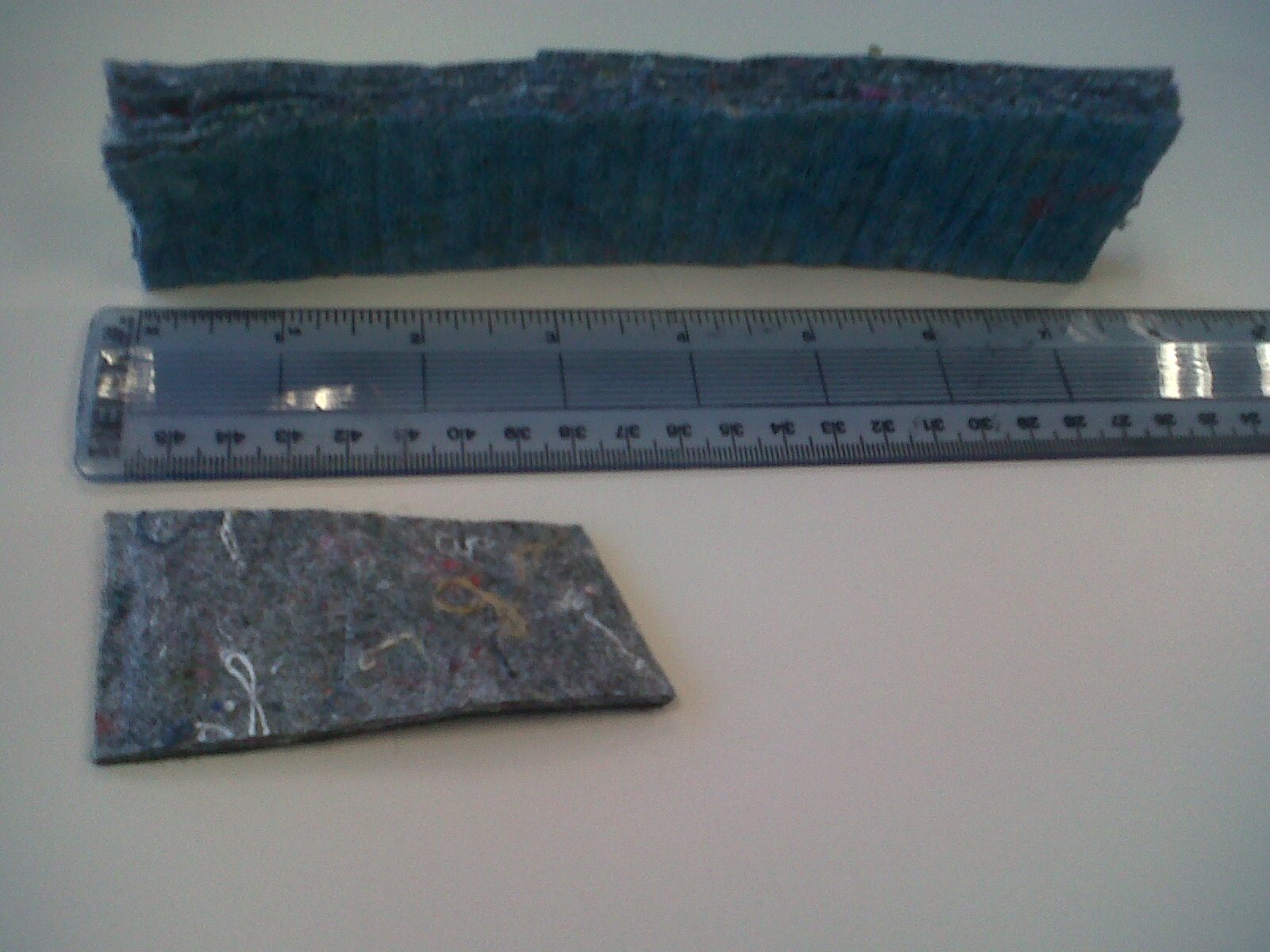
Ford vehicles continue to become more eco-friendly through the creative use of renewable and recycled materials. For instance, one of the clothing materials used in the next-generation Focus is post-consumer cotton that comes from recycled blue jeans.

"The good news is these jeans didn’t end up in a landfill, nor did we use the water, fertilizer and land to grow virgin cotton," Majeske said. "It’s an alternative that our customers can appreciate, it’s cost effective, and it’s better for our planet. These are the kinds of sustainable solutions we are looking for in all our vehicles."
Here's a look at that recycled blue jean material:

The electric Ford Focus is part of a new wave of cars designed to save you money at the gas pump (or eliminate your need for oil altogether):
I'm still planning to stick to a car-free diet once TheGreenMilesMobile has run down the curtain & joined the choir invisible. But if I do find myself needing new wheels, it's awfully nice to know that automakers are listening to our demand for greener cars.

Tuesday, September 21, 2010

Generation Y: Cars Suck

Detroit has spent decades refusing to make more fuel-efficient cars, claiming it's too expensive and besides, consumers don't want them.

That effort is finally making a difference -- but not in the way automakers expected. Seeing it as a polluting waste of time, driving is down sharply among young adults:
Selling cars to young adults under 30 is proving to be a real challenge for automakers. Unlike their elders, Generation Yers own fewer cars and don’t drive much. They’re likely to see autos as a source of pollution, not as a sex or status symbol. [...]

“This generation focuses its buying on computers, BlackBerrys, music and software and views commuting a few hours by car a huge productivity waste when they can work using PDAs while taking the bus and train,” says [Learning Resources Network President William] Draves.

Moreover, in survey after survey, Gen Yers say that they believe cars are damaging to the environment. Even hybrid electric vehicles don’t seem to be changing young consumers’ attitudes much.
True low-polluting vehicles like the Nissan Leaf and Chevy Volt are finally getting ready to hit the market. But is it too little, too late to sell Gen Yers on the idea that you can be green AND drive? And if this generation really does hate extreme commuting, what does that mean for distant suburbs that have sprung up to support Baby Boomers' craving for a white picket fence no matter how long the drive?

Via Greater Greater Washington 

Friday, July 2, 2010

Should We Feel Bad For Long-Haul Commuters?

It seems like every week, there's a new article telling us we should feel bad for long-drive commuters. Take, for example, this new Reuters article is titled Hate your commute? Then pity workers in Beijing, Mexico City. It reports on the results of the IBM Commuter Pain Study, saying traffic's getting worse, people hate it, and it's affecting their professional performance & personal health.

However, it closes with this:
But despite the frustrations and the economic downturn, few commuters had changed the way they go to work with 84 percent saying the financial crisis had not stopped them driving to work.

"Even though commuters say the traffic is getting worse, for some reason people seem fond of their cars," said Lamba who hoped the information from the survey could be used by transport officials to better understand and manage traffic flow.
So basically, long-drive commuters hate their commute so much, they aren't changing a thing. And that would be fine, except we're constantly being told by elected officials how we have to spend more tax dollars to ease the commutes of people who are doing nothing to ease their own commuting pain.

Should we help people who won't help themselves? I know there are few transit options in the far-out suburbs, but if there was public outcry, the options would be there. This study seems to indicate people would rather sit in their cars & complain than carpool or lobby for new a bus route.