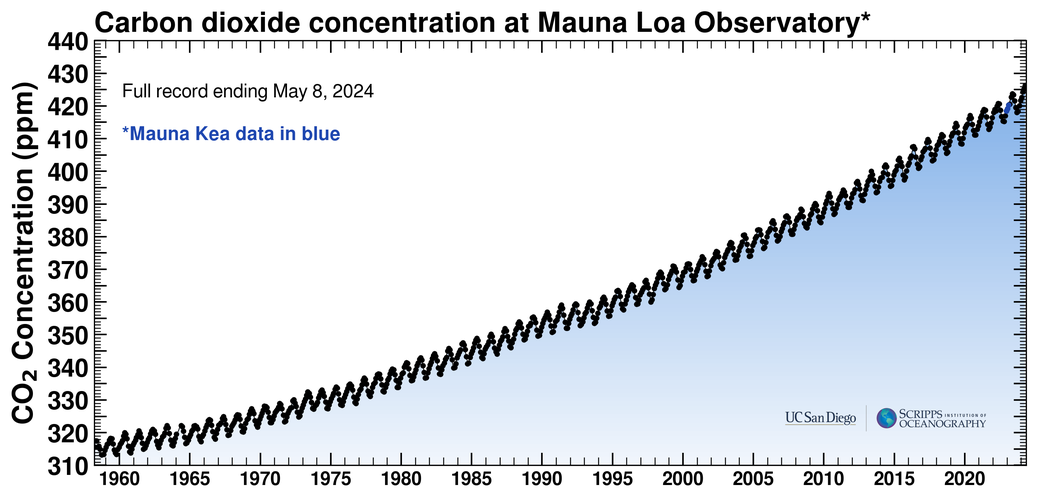
When you're hearing the U.S. Chamber of Commerce complain about limits on industrial carbon pollution using discredited numbers, remember that more than two decades ago, polluters and their allies predicted limits on acid rain pollution would destroy the economy. How'd that work out?
Those limits on the sulfur pollution from coal-fired power plants that causes acid rain were part of the Clean Air Act amendments of 1990, the same legislation under which the Environmental Protection Agency is now limiting industrial carbon pollution. According to EDF, acid rain-causing emissions have gone down faster than predicted and at a fraction of the projected cost.
How much cheaper will cutting carbon pollution be than the Chamber of Commerce projects?
Showing posts with label carbon emissions. Show all posts
Tuesday, June 3, 2014
Friday, May 30, 2014
US Chamber of Commerce Concern Trolls on Climate and Jobs
The US Chamber of Commerce is putting the full force of its polluter-funded war chest behind fighting limits on industrial carbon pollution set to be announced by the Environmental Protection Agency on Monday. Paul Krugman dives into their numbers and finds even by the Chamber's biased analysis, the cost of climate action would be just 0.2% of economic growth:
You might ask why the Chamber of Commerce is so fiercely opposed to action against global warming, if the cost of action is so small. The answer, of course, is that the chamber is serving special interests, notably the coal industry — what’s good for America isn’t good for the Koch brothers, and vice versa — and also catering to the ever more powerful anti-science sentiments of the Republican Party.Remember, this is the same U.S. Chamber of Commerce that has fought every single Obama administration effort to create jobs. Either the US Chamber's sudden concern for jobs is a fraud, or they only care about saving jobs in the polluting industries that fund the Chamber. But you will never hear a reporter point this out, because connecting the dots has a well-known liberal bias.
Finally, let me take on the anti-environmentalists’ last line of defense — the claim that whatever we do won’t matter, because other countries, China in particular, will just keep on burning ever more coal. This gets things exactly wrong. Yes, we need an international agreement to reduce emissions, including sanctions on countries that don’t sign on. But U.S. unwillingness to act has been the biggest obstacle to such an agreement. If we start taking serious steps against global warming, the stage will be set for Europe and Japan to follow suit, and for concerted pressure on the rest of the world as well.
Now, we haven’t yet seen the details of the new climate action proposal, and a full analysis — both economic and environmental — will have to wait. We can be reasonably sure, however, that the economic costs of the proposal will be small, because that’s what the research — even research paid for by anti-environmentalists, who clearly wanted to find the opposite — tells us. Saving the planet would be remarkably cheap.
Posted by
TheGreenMiles
at
Friday, May 30, 2014
Friday, December 13, 2013
Northeast Climate Change Compact Keeps Proving Carbon Cap and Trade Works Really Well
Massachusetts and eight other states – Connecticut, Delaware, Maine, Maryland, New Hampshire, New York, Rhode Island and Vermont – are part of the Regional Greenhouse Gas Initiative (RGGI), which is the nation’s first “cap-and-trade” program. Power plants in the RGGI states must purchase “allowances” that allow them to emit carbon dioxide. The states auction off these allowances and use the proceeds for public purposes, especially investments in energy efficiency, which create jobs and keep energy spending local.$350 million in revenue for Massachusetts alone? I wonder how much his state would be raking in if Gov. Chris Christie hadn't pulled New Jersey out of the program. What's the opposite of fiscal conservatism? Christie's pander to the Tea Party was that.
The revisions to the Commonwealth’s RGGI program, as well as similar changes in the other eight states, will lower the existing “cap” on power plant emissions in the RGGI states from the current level of 165 million tons per year to 91 million tons per year starting in 2014. The cap will then be lowered by 2.5 percent each year thereafter until 2020. This reduction will ensure that in 2020, power plant emissions from these nine states will be half of what they were in 2005, when RGGI was initiated.
The lower cap is also expected to generate an estimated $350 million in additional revenue for the Commonwealth by 2020. These revenues will be invested primarily in programs to improve energy efficiency in Massachusetts’ municipalities, businesses and residences, which will, in turn, reduce energy costs and lower carbon dioxide emissions.
But cap and trade is supposed to bankrupt families and leave children shivering in the dark ... uh, right?
Before making these revisions, the RGGI states conducted extensive modeling on the impacts of these changes on consumers. The modeling shows that the impacts of the reduced emissions cap will be very modest, less than one percent in consumer bills. The average Massachusetts residential customer’s monthly electric bill of $72 will rise by 39 cents; the average commercial customer’s monthly bill of $455 will rise by $3.89; and the average industrial customer’s monthly bill of $6,659 will rise by $83.A little over a penny a day to curb superstorms like Sandy and make sure we pass on a stable climate to our children and grandchildren? Seems like the biggest doorbuster bargain of the holiday season.
Posted by
TheGreenMiles
at
Friday, December 13, 2013
Saturday, May 11, 2013
Another Inconvenient Truth: Sometimes American Politics Kill People
As the carbon dioxide levels in our atmosphere rocket past 400 parts per million this week, what's more evident than ever is the inability of our political systems to respond to this crisis that's killing Americans right now and growing worse by the day.
Politicians and the reporters who cover them do NOT like hearing that. They absolutely hate being told that the American political system isn't responding fast enough to a crisis and that people might die as a result. This is how we do things! How dare you ask us to change just for your issue? The folks in industry don't tell us that we're accomplices in mass death and they throw really killer parties.
But we knew that cigarettes killed tens of millions of people and tobacco companies covered it up ... and Washington took decades to respond. We knew lack of health insurance killed millions of people and bankrupted millions of other families ... and Washington took decades to respond.
The climate crisis cannot be solved by horse trading. It cannot be solved by trying to say yes to everyone - to cutting carbon pollution AND to whatever Big Oil and Big Coal are demanding. And it cannot be solved by We'll Have to Leave It There journalism that tells viewers, "Scientists say this, polluter front groups say that, who can say what's true?"
We need what Grist's David Roberts calls wartime mobilization - an all of the above approach to cutting carbon emissions. Can Washington answer that call to action?
Politicians and the reporters who cover them do NOT like hearing that. They absolutely hate being told that the American political system isn't responding fast enough to a crisis and that people might die as a result. This is how we do things! How dare you ask us to change just for your issue? The folks in industry don't tell us that we're accomplices in mass death and they throw really killer parties.
But we knew that cigarettes killed tens of millions of people and tobacco companies covered it up ... and Washington took decades to respond. We knew lack of health insurance killed millions of people and bankrupted millions of other families ... and Washington took decades to respond.
The climate crisis cannot be solved by horse trading. It cannot be solved by trying to say yes to everyone - to cutting carbon pollution AND to whatever Big Oil and Big Coal are demanding. And it cannot be solved by We'll Have to Leave It There journalism that tells viewers, "Scientists say this, polluter front groups say that, who can say what's true?"
We need what Grist's David Roberts calls wartime mobilization - an all of the above approach to cutting carbon emissions. Can Washington answer that call to action?
Posted by
TheGreenMiles
at
Saturday, May 11, 2013
Wednesday, June 20, 2012
New Poll: Only 1 in 7 Americans Support Inhofe Polluter Bill; Majorities Want EPA Mercury & Carbon Action
UPDATE 11:58am: Warner & Webb voted with Sen. Inhofe. Disgraceful. Fortunately, 53 other senators stood up for public health & killed the bill.
Not only is Sen. Jim Inhofe's bill to block new Environmental Protection Agency mercury standards horrible public policy that would kill a lot of people, a new United Technologies/National Journal poll finds it's wildly unpopular with voters:
Photo courtesy Flickr's Symbiosis
A new United Technologies/National Journal Congressional Connection Poll finds that 57 percent of the public supports a recently-finalized Environmental Protection Agency rule controlling mercury and other toxic air pollution from coal-fired power plants as long as companies are given more time to comply.Again, I'd ask Senators Mark Warner and Jim Webb: This is a hard call? Really? Which part is a tough call, the part where it lets corporate polluters profit by treating America's air and water like an open sewer? The part where people with asthma die? Or the part where it's incredibly bad politics?
The poll found that a similar majority—55 percent—thinks EPA should be able to control greenhouse-gas emissions that most scientists agree cause climate change. Just slightly more than one-third of the public—36 percent—said Congress should stop EPA from such regulation. A federal court is expected to rule soon on whether the agency is within its right to regulate greenhouse-gas emissions.
The poll’s findings put a majority of Americans out of step with Senate Environment and Public Works Committee ranking member James Inhofe, R-Okla., who is sponsoring a measure coming up for a vote on Wednesday that would nullify EPA’s mercury rule entirely. Just under 20 percent of survey respondents said the Senate should vote to uphold the rule as it stands now, while only 14 percent said the Senate should vote to get rid of it.
Photo courtesy Flickr's Symbiosis
Posted by
TheGreenMiles
at
Wednesday, June 20, 2012
Friday, May 25, 2012
Don't Play Chicken with Mother Nature, Says WJLA's Bob Ryan
Rather than minutes or hours, Americans in the possible path of a hurricane have to make a decision. Days ahead. Do I evacuate? Do I believe the forecast? There is that cone of uncertainty . . . do I take a chance? Is the science of hurricane forecasting, “settled”? Again of course not, but decisions, human and economic decisions affecting sometimes millions are made, knowing the exact outcome is uncertain.You hope your chance of having a car accident is less than 100%, yet you buy car insurance anyway. You hope the chance of your home catching fire is closer to 0%, yet you buy home insurance anyway.
Supposedly the great Yogi Berra said, “It’s tough making predictions, especially about the future”. However, we make decisions every day about some prediction whether it is the traffic during rush hour, canceling a weekend picnic or headed with my family to a shelter when I hear a tornado siren.
Why should a decision about what action we take based on expert outlooks for our climate and national, regional and local changes 50 or 100 years from now be any different than making a decision, taking actions, minutes, hours, days or even a week from now knowing the tornado or hurricane, snow storm or seasonal forecast is also uncertain. The science is not settled but the modern science of forecasting short term weather is solid and the modern science of estimating long term climate changes (yes global warming and it impacts) is solid. Are either 100% accurate? Do we require 100% accuracy before making a decision or taking action? Ask folks in Joplin what they will do the next time a tornado warning siren sounds.
We make decisions every day without 100% certainty, other than the sun will come up. The science of short-term weather and longer-term climate is solid. Neither is 100% certain but look where we have come in 60 years from no alerts to “You could be killed if not underground or in a tornado shelter”. Where will we be in making climate related decisions 60 years from now? Let’s hope history gives us some perspective for our future shared decisions.
The cost of cutting carbon pollution is tiny compared to how much inaction could cost. With 97% of climate scientists agreeing that our climate is warming, man-made carbon pollution is to blame, and we only have a narrow window to take action, shouldn't we get moving now?
Or should we kick up the footrest on our recliner & hope that tornado out the window will miss us?
Posted by
TheGreenMiles
at
Friday, May 25, 2012
Thursday, May 10, 2012
New Ad Asks Virginians to Speak Up for Industrial Carbon Pollution Limits
On the same day a new poll shows supermajorities of small business owners support clean energy & limits on industrial carbon pollution, a new television ad is asking Virginians to stand up for clean air:
The ad focuses attention on a recent Department of Labor study showing that transitioning away from dirty sources of energy to clean technology development and innovation in turn creates jobs. In fact, the Labor Department study concludes that the transition to cleaner energy and technology has already created 3.1 million jobs (Bureau of Labor Statistics, March 2012).Over 800,000 Americans have already told the Environmental Protection Agency that they support the new rules. It only takes a minute, so please speak up for clean air right now.
"Clean air protects health and enhances our economy," said Martin Hayden, vice president of policy & legislation at Earthjustice. "According to a Brookings Institute study, between 2003 and 2010, the clean tech sector outperformed the national economy as a whole, expanding 3.4 percent annually. Letting the EPA enforce the Clean Air Act and limit dangerous air pollution spewing from smokestacks will not only make it easier for Americans to breathe, it will also boost the clean technology sector and help create more jobs."
"Whether aimed at toxic air pollutants like mercury or dangerous carbon pollution, there are multiple benefits from job-creating clean air standards," said Joe Mendelson, global warming policy director at the National Wildlife Federation, the sister organization of NWF Action Fund. "EPA air standards that clean up power plants are good for our economy, the health of our families and communities, addressing climate change and for protecting wildlife and their habitat."
Posted by
TheGreenMiles
at
Thursday, May 10, 2012
Tuesday, October 11, 2011
Can We Outrun the Climate Firestorm We're Stoking?
Until now, I've thought of our climate choices as "mild disruption," "wrenching calamity," and "civilization-threatening catastrophe," depending on how quickly and seriously we act to cut carbon pollution. But reading Jeff Goodell's Rolling Stone article on Australia's grim future, I wonder if our continued inaction is putting that first option in the rear view mirror.
The United Nations International Panel on Climate Change issued its 4th Assessment in 2007, predicting a low carbon emissions scenario would see a rise in temperatures by 2100 of about 2 degrees Celsius (about 3 degrees Fahrenheit). The UN continues to cite that 2 degrees C as its goal for maximum temperature rise.
But since that report nearly five years ago, global carbon pollution has continued to rise steadily. And with Washington talking about sticking a new tar sands pipeline in our oil addicted veins, now experts are wondering if we'll act fast enough to avoid the dreaded high emissions scenario:
How bad could it get? A recent study by MIT projects that without "rapid and massive action" to cut carbon pollution, the Earth's temperature could soar by nine degrees this century. "There are no analogies in human history for a temperature jump of that size in such a short time period," says Tony McMichael, an epidemiologist at Australian National University. The few times in human history when temperatures fell by seven degrees, he points out, the sudden shift likely triggered a bubonic plague in Europe, caused the abrupt collapse of the Moche civilization in Peru and reduced the entire human race to as few as 1,000 breeding pairs after a volcanic eruption blocked out the sun some 73,000 years ago. "We think that because we are a technologically sophisticated society, we are less vulnerable to these kinds of dramatic shifts in climate," McMichael says. "But in some ways, because of the interconnectedness of our world, we are more vulnerable."Politicians & the media focus almost exclusively on the cost of switching to clean energy. But Australia's case is a reminder that the cost of climate inaction would be far higher.
With nine degrees of warming, computer models project that Australia will look like a disaster movie. Habitats for most vertebrates will vanish. Water supply to the Murray-Darling Basin will fall by half, severely curtailing food production. Rising sea levels will wipe out large parts of major cities and cause hundreds of billions of dollars worth of damage to coastal homes and roads. The Great Barrier Reef will be reduced to a pile of purple bacterial slime. Thousands of people will die from heat waves and other extreme weather events, as well as mosquito-borne infections like dengue fever. Depression and suicide will become even more common among displaced farmers and Aborigines. Dr. James Ross, medical director for Australia's Remote Area Health Corps, calls climate change "the number-one challenge for human health in the 21st century."
You can read the whole article here, but as I've written before, buying the newsstand version is a vote with your wallet to keep good environmental journalism coming.
Posted by
TheGreenMiles
at
Tuesday, October 11, 2011
Monday, April 25, 2011
Green Groups Giving Up Carrying The Torch For Carbon Pollution Limits?
In yesterday's post on how we need a climate bill not just individual action on Earth Day, I wanted to include a link to email your member of Congress to ask them to pass clean energy & climate legislation.
So I checked the website of the Sierra Club ... then Repower America ... then NRDC ... then the National Wildlife Federation ... then Greenpeace ... then Friends of the Earth ... and there could have been more ... before I finally found a climate bill action alert at the Environmental Defense Fund. I'm not saying there are definitely no climate bill email links at those groups' sites, but I couldn't find them with a few clicks & quick scanning.
If national conservation organizations aren't going to keep talking about limiting carbon pollution, who will?
I understand House Republicans aren't going to do much of anything that's positive on energy or environmental issues at all this year, never mind try to solve our biggest problems. When it comes to protecting public health & wildlife, we're playing defense this year, beating back attacks on the Clean Air Act & Clean Water Act. And after years of rallying around a climate bill, I can understand mixing in some other issues as well to keep people's eyes from going crossed.
But what I don't understand is the conservation groups' continued focus on compromises like renewable energy standards. If we're in a political climate in which nothing is achievable, why focus on the achievable? If you're going into a negotiation and you know the other person's going to say no, why water down your ask? Why not ask for what you really want?
The next milepost in this debate is January 2013. The House can only get more friendly to tackling the climate crisis, the Senate has about a 50/50 chance of staying where it is or getting friendlier, and President Obama is a good bet for reelection against a weak GOP field.
Now is the time to push the reset button and set the goal for the debate after the 2012 election (there can be plenty of watering down after that). Where do conservation groups want the carbon pollution debate to start? A carbon tax? Cap and trade? Cap and dividend? In a dreary time, let's dream big.
So I checked the website of the Sierra Club ... then Repower America ... then NRDC ... then the National Wildlife Federation ... then Greenpeace ... then Friends of the Earth ... and there could have been more ... before I finally found a climate bill action alert at the Environmental Defense Fund. I'm not saying there are definitely no climate bill email links at those groups' sites, but I couldn't find them with a few clicks & quick scanning.
If national conservation organizations aren't going to keep talking about limiting carbon pollution, who will?
I understand House Republicans aren't going to do much of anything that's positive on energy or environmental issues at all this year, never mind try to solve our biggest problems. When it comes to protecting public health & wildlife, we're playing defense this year, beating back attacks on the Clean Air Act & Clean Water Act. And after years of rallying around a climate bill, I can understand mixing in some other issues as well to keep people's eyes from going crossed.
But what I don't understand is the conservation groups' continued focus on compromises like renewable energy standards. If we're in a political climate in which nothing is achievable, why focus on the achievable? If you're going into a negotiation and you know the other person's going to say no, why water down your ask? Why not ask for what you really want?
The next milepost in this debate is January 2013. The House can only get more friendly to tackling the climate crisis, the Senate has about a 50/50 chance of staying where it is or getting friendlier, and President Obama is a good bet for reelection against a weak GOP field.
Now is the time to push the reset button and set the goal for the debate after the 2012 election (there can be plenty of watering down after that). Where do conservation groups want the carbon pollution debate to start? A carbon tax? Cap and trade? Cap and dividend? In a dreary time, let's dream big.
Posted by
TheGreenMiles
at
Monday, April 25, 2011
Monday, December 27, 2010
Conservatives Make Their Own Reality: Clean Air Act Edition
It's incredible how many Republicans were rabidly behind the unitary executive wielding unlimited power two years ago & how many Republicans today rail about checks & balances. (To be fair, James Joyner is one of the few conservatives willing to call out Bush administration jackassery.)
An incredible 71 percent of Americans say the federal government should regulate carbon pollution. Polls show that support is remarkably deep - strong majorities support regulation even if it would cost them money.
In the face of that mandate, how do conservatives reconcile their continued opposition to action? James Joyner says let's play make believe!
It's the classic move of a climate peacock for Joyner to claim his opposition to climate action is based on some sort of procedural grievance. Well, you know, I'm not some science-denying fossil fuel-shilling ignoramus like Sen. Jim Inhofe ... but but but ... what would Jefferson say?
What would Jefferson do about global warming? I think Jefferson would get off his ass & do something instead of sitting around conjuring whiny complaints about process. Don't you?
An incredible 71 percent of Americans say the federal government should regulate carbon pollution. Polls show that support is remarkably deep - strong majorities support regulation even if it would cost them money.
In the face of that mandate, how do conservatives reconcile their continued opposition to action? James Joyner says let's play make believe!
Frustrated that it couldn’t achieve desired environmental legislation despite huge majorities in both Houses of Congress, the Obama administration has decided to govern by executive fiat. [...]Let's review all the realities Joyner must ignore to make his argument here:
Presidents have, since the days of George Washington and Thomas Jefferson, made unilateral decisions arguably outside the scope of their Constitutional power and dared Congress or the Courts to stop them. The practice has increased over time and been made easier by Congress having delegated much of its power to Executive agencies. The consequence is an administrative state where the elected representatives of the people have a mostly reactive role, acting to check these agencies, rather than making affirmative decisions on national policy.
- The Obama administration is acting on the direction of Massachusetts v. Environmental Protection Agency, a decision from 2007's conservative Supreme Court. That decision found the Bush II administration's argument for why it shouldn't have to regulate carbon pollution under the Clean Air Act "inadequate."
- The Clean Air Act was passed by a Democratic Congress & signed by a Republican president (Bush I).
- Clean energy & climate legislation passed the House & had majority support in the Senate but failed to pass because Senate Republicans were willing to abuse the filibuster in historic numbers.
- How many individual EPA regulations get an up or down vote before the full Congress? Just six months ago, the Senate confirmed its approval of carbon regulations under the Clean Air Act (the House did not vote but would certainly have overwhelmingly approved).
It's the classic move of a climate peacock for Joyner to claim his opposition to climate action is based on some sort of procedural grievance. Well, you know, I'm not some science-denying fossil fuel-shilling ignoramus like Sen. Jim Inhofe ... but but but ... what would Jefferson say?
What would Jefferson do about global warming? I think Jefferson would get off his ass & do something instead of sitting around conjuring whiny complaints about process. Don't you?
Posted by
TheGreenMiles
at
Monday, December 27, 2010
Friday, February 27, 2009
Which Virginia Companies Will Benefit from a Carbon Cap?
Want to know which Virginia companies will benefit from a cap on carbon pollution? Check out this new interactive map of Virginia from the Environmental Defense Fund.
For just one example, the furthest southwest icon on the map belongs to Royal Mouldings in Marion. It makes cellular vinyl, a lumber substitute that insulates 70 percent better than wood for a substantial energy savings (plus, no chopping down trees).
Cross-posted from Article XI
Posted by
TheGreenMiles
at
Friday, February 27, 2009
Wednesday, October 1, 2008
Carbon Emissions Soar. Will Bush Take Responsibility Again?
Take a few days off and the whole world goes to hell. In this case, literally. No, I don't mean the financial crisis, though I have no interest in looking at my 401(k) balance right now.
I'm talking about the new global carbon emissions figures released last week, which show a shockingly steep rise:
As soon as we learned US emissions fell slightly last year, President Bush immediately held a news conference and issued a gloating statement taking credit for the fall. I'm still waiting for the news conference and statement admitting he was wrong.
Scientists say we need to be cutting carbon emissions two percent a year. Instead, they rose three percent globally and two percent here in the US.
The richest country in the world that should be taking the lead on energy-efficient technology. Instead, we're leading the way in race to the bottom, and the Bush administration and its Republican allies are leading the way.
I'm talking about the new global carbon emissions figures released last week, which show a shockingly steep rise:
The new numbers, called "scary" by some, were a surprise because scientists thought an economic downturn would slow energy use. Instead, carbon dioxide output jumped 3 percent from 2006 to 2007. That's an amount that exceeds the most dire outlook for emissions from burning coal and oil and related activities as projected by a Nobel Prize-winning group of international scientists in 2007.
Meanwhile, forests and oceans, which suck up carbon dioxide, are doing so at lower rates than in the 20th century, scientists said. If those trends continue, it puts the world on track for the highest predicted rises in temperature and sea level.
The pollution leader was China, followed by the United States, which past data show is the leader in emissions per person in carbon dioxide output. And while several developed countries slightly cut their CO2 output in 2007, the United States churned out more. [...]
Emissions in the United States rose nearly 2 percent in 2007, after declining the previous year. The U.S. produced 1.75 billion tons of carbon (1.58 billion metric tons).
As soon as we learned US emissions fell slightly last year, President Bush immediately held a news conference and issued a gloating statement taking credit for the fall. I'm still waiting for the news conference and statement admitting he was wrong.Scientists say we need to be cutting carbon emissions two percent a year. Instead, they rose three percent globally and two percent here in the US.
The richest country in the world that should be taking the lead on energy-efficient technology. Instead, we're leading the way in race to the bottom, and the Bush administration and its Republican allies are leading the way.
Posted by
TheGreenMiles
at
Wednesday, October 01, 2008
Subscribe to:
Posts (Atom)