Showing posts with label coal. Show all posts

Thursday, September 8, 2016

Conservative Media's New Lie About Obama and Coal Jobs

Conservative media keeps saying there have been 83,000 coal mining jobs lost under President Obama. The problem is that there were barely that many coal mining jobs total when President Obama took office.

Total U.S. coal mining jobs, according to the Energy Information Administration:
  • 2009: 86,859
  • 2014: 74,931 (most recent year available)
If you believe the historic trends, the war on coal began under President Reagan and has had only modest success under President Obama:


The truth is that mechanization has been killing coal jobs for decades. As the Center for American Progress reports, in recent years, cheap fracked gas and competition with foreign coal have done as much to hurt coal as clean air regulations.

Wednesday, August 12, 2015

How Big Coal Gave Us The Clean Power Plan

As polluters and their political allies decry President Obama's Clean Power Plan, it's understandable they're ignoring the reality that they created it. As Kate Sheppard recounts at Huffington Post, friends of the coal industry, namely the minority of Republican and coal state Democrat senators, filibustered the 2010 clean energy & climate bill, which contained the ungodly sum of $177 billion to subsidize carbon capture & storage at coal-fired power plants.

Despite that massive giveaway offer negotiated by coal ally Rep. Rick Boucher (D-VA), despite President Obama making clear that if the bill died he'd use the Clean Air Act to limit carbon pollution, coal allies blockaded the bill anyway. And then they voted their powerful Democratic ally Boucher out of office, replacing him with an inept, back-bench Tea Party Republican.

Coal and its allies were gambling they could kill the climate bill and block the Clean Power Plan. Here in 2015, it's breathtaking to look at just how spectacularly that plan blew up in Big Coal's face.

Even at the time, it was clear the climate bill's death also killed any hope coal could ever be clean. But just five years later, even the old-fashioned coal-fired power that's allowed to dump carbon pollution into the atmosphere for free is now in a death spiral - well before the Clean Power Plan takes effect.

I talked about the Clean Power Plan with Bruce DePuyt on News Channel 8's Newstalk:

Wednesday, April 8, 2015

Everyone Hates Coal. Pandering To It Is Stupid Politics.

Political reporters paint investments in clean energy as a pander to a narrow segment of the Democratic base, while pledges to continue investment in coal are framed as smart plays to shoring up the moderate middle. And of course you have to support corn ethanol or you'll lose the entire center of the country!

But take a look at this new poll of homeowners by Zogby Analytics for Clean Edge and Solar City:

It's solar and wind that are broadly popular, while coal and biofuels have only fringe support - and keep in mind this question allowed people to name their top three.

Meanwhile, for all the talk of the popularity of fracked gas, it finished a distant third to clean energy.

Monday, October 6, 2014

Tonight, Chris Hayes Begins "All in America: Coal Country"

The All In with Chris Hayes staff has also put together a series of advanced reading posts to learn more about the politics of coal, what is "clean" coal, coal & tobacco, and alternative energy:

Wednesday, August 27, 2014

Erick Erickson: Screw Our Children, I Want Cheap Coal Now

Flooding Danube"Let the seas rise. Let the wind blow." That's top Republican commentator Erick Erickson's position on climate change. I would say he's a "conservative" commentator, but there's absolutely nothing conservative about gas up your SUV cheaply now and leave the bill for future generations to pay. It's pure selfishness - "I've got mine so screw you" presented as profound political philosophy.

Erickson may just be one blogger, but here he gets to the core motivations of today's Congressional Republican leadership - America isn't worth investing in. Energy? Just give me what's cheapest today, if we need alternatives tomorrow, someone else can spend the money on it. Education? If my family needs that, I can pay to send my children to private school, but I won't volunteer a dime in additional taxes to improve our community. The environment? I can buy home air filters and bottled water - if you can't, too bad for you & yours.

"We are all going to die," Erickson cynically concludes. "Just not today." And by then, it'll be up to our children and grandchildren to build massive hurricane barriers outside every East Coast city to keep out the rising seas and monster storms as the bill comes due for all that cheap coal, oil and fracked gas.

Thursday, August 14, 2014

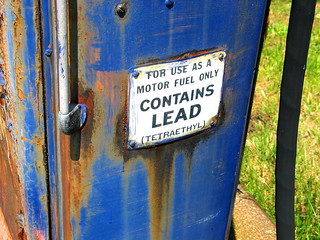
A New Surprise Benefit of Cutting Lead Pollution

Contains LeadStudies have shown a strong connection between the phase-out of lead in gasoline starting in the mid-1970s and a plunge in violent crime in the following decades. As Kevin Drum reports at Mother Jones, a new study is connecting lower levels of childhood lead exposure to a later drop in the teen pregnancy rate:
For years conservatives bemoaned the problem of risky and violent behavior among children and teens of the post-60s era, mostly blaming it on the breakdown of the family and a general decline in discipline. Liberals tended to take this less seriously, and in any case mostly blamed it on societal problems. In the end, though, it turned out that conservatives were right. It wasn't just a bunch of oldsters complaining about the kids these days. Crime was up, drug use was up, and teen pregnancy was up. It was a genuine phenomenon and a genuine problem.

But liberals were right that it wasn't related to the disintegration of the family or lower rates of churchgoing or any of that. After all, families didn't suddenly start getting back together in the 90s and churchgoing didn't suddenly rise. But teenage crime, drug use, and pregnancy rates all went down. And down. And down.

Most likely, there was a real problem, but it was a problem no one had a clue about. We were poisoning our children with a well-known neurotoxin, and this toxin lowered their IQs, made them into fidgety kids, wrecked their educations, and then turned them into juvenile delinquents, teen mothers, and violent criminals. When we got rid of the toxin, all of these problems magically started to decline.
Today, we're debating whether to cut the toxic heavy metal and carbon pollution from coal by shutting down the oldest, dirtiest coal-fired power plants. But the benefits aren't hidden - we know coal kills thousands of people every year and causes thousands more asthma attacks in children.

Electricity rates and jobs are obviously important, but why do reporters talk almost exclusively about those, and hardly at all about these very real impacts on our lives? When did human health become a sidebar story?

Thursday, May 22, 2014

Men of Big Coal Send Women to Lobby Congress

The coal lobby is sending women to lobby Congress this week. The Women's Mining Coalition includes "companies like Arch Coal Inc. and Cloud Peak Energy Inc.," reports Manuel Quinones of E&E News.

"This group of females really represents such tremendous leadership across the entire mining sector," says the group's president. Does it? Let's take a look at the numbers:
It's the latest reminder that polluting industries are run almost exclusively by rich old white guys.

Friday, February 14, 2014

Obama Administration Official Shilling Hard for Coal

People who don't listen to what the Obama administration like to complain about an imaginary war on coal. But if you listen to the actual words spoken by actual administration officials, they often sound a lot like coal executives. (I say executives because there are very few coal mining workers left - machines do almost all of the work now.)

Listen to Julio Friedmann, deputy assistant secretary for clean coal at the Energy Department, who makes the Obama administration sound incredibly desperate to be the coal industry's best friend:
Friedmann said it was “unquestionable” that coal would remain an essential element of a “vibrant” American energy portfolio but said it would be difficult to reduce greenhouse gas emissions and address climate change without the use of CCS technologies.

“It's a technology that we simply need to have,” Friedmann said.
Why do we need to have carbon capture & storage coal-fired power plants? If solar, wind and tidal power become cheaper than even dirty coal - and in New England wind is already cheaper than coal - why would it be "questionable" to install as much clean energy as possible, blow up coal plants, and use gas-fired plants to fill in any gaps? (Gas plants can fire up much faster than coal plants and are much cheaper than nuclear.)

Is it to protect coal jobs? The solar energy industry already employs more people than the coal and gas industries combined. Why are Obama administration staffers like Friedmann be putting a thumb on the scale for coal? As Sen. Sheldon Whitehouse (D-RI) explained, we should look out for the fate of high-carbon energy industry workers, but not at the expense of workers in countless other industries like fishing, skiing and foresting that suffer due to carbon pollution.

But as Andrew Breiner reports at Climate Progress, Friedmann has more reasons to advocate for carbon capture & storage coal plants than just, is it good for America? The real question is, is it good for Friedmann's past and likely future employers?
Friedmann is a Ph.D geologist, and comes to the DoE from the Lawrence Livermore National Laboratory, a federally-funded research organization, where he worked in carbon capture and sequestration. His resume also lists work with ExxonMobil and board memberships with the National Coal Council, a coal industry group that lobbies the government. He has also worked with energy companies, as well as with clean energy research organizations. [...]

The very existence of Friedmann’s clean coal post is boon for the coal industry. The possibility of “clean coal” is highly questionable, and industry has pushed the idea for decades to allay concerns about the environment and climate change. While the DoE has pursued a variety of worthwhile efforts to make fossil fuel production generate less CO2, it cannot do enough to make coal a fuel that can be safely pursued. But the DoE will continue to fund research and demonstration projects that support its desirability as a climate change solution, fostering positive public perceptions of coal, and decreasing the perceived urgency of abandoning it.
It is at this point I must remind you that this is a Democratic administration, which is allegedly the party that understands we need to get off of coal as quickly as possible if we have any hope of keeping climate change from becoming climate crisis.

No matter who's in charge in DC, the fix is always in for dirty energy. The default, the center of gravity, the least painful thing is to do what the polluters and their huge piles of desperately-needed campaign cash want you to do.

It's always up to average citizens to make our elected officials feel enough pressure to do the right thing. That's the only way things change.

Thursday, February 6, 2014

True Price of Coal: Massive Ash Spill Threatens Dan River's Fish, Drinking Water

On Sunday, a security guard spotted a leak at an enormous Duke Energy coal ash pond. It's now estimated that 82,000 tons of coal ash flowed into the Dan River along with 27 million gallons of water. Matt Wasson, the program director of Appalachian Voices pictured here collecting a water sample, warns the river's dozen or so fish species are at risk:
Wasson, calling the incident “a massive disaster,” said six inches of coal ash covered the bottom of the river Tuesday about two miles downstream from the spill site. “It’s like a lava flow moving slowly toward Danville on the bottom of the river,” Wasson said.

Selenium toxicity could be a concern for humans for months or years as a result of the spill, Wasson said. Arsenic could reduce the number of fish available in the Dan River for years, harming the food chain on which they depend for food.

“It’s fair to say possible impacts of this on fish populations could extend for years,” he said.
When politicians talk about the cost of coal energy vs. clean energy, they never (OK, maybe if their name is Jim Moran or Sheldon Whitehouse) talk about costs like these. What's the cost of threatening the Dan River's drinking water and entire fish population? When politicians like State Sen. Tom Garrett claim to be terribly concerned about the impacts of wind power on birds, why aren't they outraged that bald eagles will now be eating coal ash-poisoned fish out of the Dan River?

And let's not forget the horrifying impacts of coal power on human health even when everything's going right:
Mercury contamination is so widespread that one out of every six pregnant women have mercury levels in their blood high enough for levels in the fetus to reach or surpass the EPA's safety threshold for mercury.

According to the latest government data, this means that 630,000 children are born each year with a strong chance of developing serious mercury-related health effects.

According to the American Lung Association, 24,000 people a year die prematurely because of pollution from coal-fired power plants. And every year 38,000 heart attacks, 12,000 hospital admissions and an additional 550,000 asthma attacks result from power plant pollution.
And coal plants get to inflict all this damage without paying a cent for it. It's called privatizing profit and socializing the risk. Tell the Environmental Protection Agency you support strong new limits on carbon pollution from coal-fired power plants.

Monday, September 23, 2013

Breaking: Big New England Wind Contract Much Cheaper Than Coal, Nuclear

Turbines at Fall 8What if the debate about Environmental Protection Agency limits on climate-disrupting carbon pollution was all hot air? What if the falling cost of clean energy has already planted a stake in coal's polluting heart?

As Erin Ailsworth of the Boston Globe reports, a new onshore wind contract just signed in New England is a game-changer for how we talk about energy:
The state’s biggest utilities, in a milestone for New England’s wind power industry, have signed long-term contracts to buy wind-generated electricity at prices below the costs of most conventional sources, such as coal and nuclear plants.

The contracts, filed jointly Friday with the Department of Public Utilities, represent the largest renewable energy purchase to be considered by state regulators at one time. If approved, the contracts would eventually save customers between 75 cents and $1 a month, utilities estimated. [...]

John Howat, senior energy analyst at the Boston-based National Consumer Law Center, said he needed to review the details before he could provide a thorough assessment of the contracts. But his initial reaction to the price — on average, less than 8 cents per kilowatt hour? “Wow.”
For a comparison, in the same time frame gas is projected to cost 7 cents/KWH, coal 10 cents/KWH and nuclear 11 cents/KWH.

A dollar a month may not seem like a lot. But if wind is cheaper than coal, why would you ever build a new coal-fired power plant? And that's not even starting to account for all the climate change, public health and wildlife benefits that come with switching from coal to wind. When the cost of pollution is factored in, both wind and solar power blow the doors off of coal and are competitive with gas.

Why should we go all-in on wind when gas is projected to be slightly cheaper? Because New England is already dangerously dependent on gas, leaving us vulnerable to price spikes like we saw last winter. And since gas can fire up much faster than coal plants, gas and wind actually go very well together. (No, that was not a fart joke. Let's keep moving.)

In this context, the hot air being spewed in Washington over carbon regulations seems quaint at best. At worst, it's a war on consumers as polluters and their allies try to force us to keep buying expensive, dirty energy.

Friday, September 20, 2013

Remember When the Coal Industry Loved "Clean Coal"?

The Environmental Protection Agency is unveiling carbon pollution limits for new power plants today. The coal industry is screaming bloody murder that no one could possibly expect new coal-fired power plants to implement carbon pollution-cutting technology, but it was only a few years ago that Big Coal was promising Americans it could do exactly that.

The rules will require that coal-fired power plants stop treating our skies like an open carbon sewer. While the rules are only being made public today, the coal industry has spent all week promising to send an army of corporate lawyers to fight the pollution restrictions:
Utility companies with large coal fleets already are preparing to challenge the rule, if it is finalized, on the grounds that the agency is requiring pollution controls that have not yet been “adequately demonstrated” in the marketplace. Joseph Stanko, head of government relations for the law firm Hunton & Williams, said the EPA’s reliance on “federally funded demonstration projects” as the base for its new standard “is illegal, it doesn’t ‘adequately demonstrate’ technology for normal use.”
Remember the coal industry was buying billboards promising us coal could be "clean and green with new technologies"?

Ah, but that was before the coal industry blocked a clean energy and climate bill that would've provided billions in taxpayer subsidies for "clean coal." Without taxpayers footing the bill, suddenly the idea of "clean coal" seems crazy to coal lobbyists:
Hal Quinn, president and chief executive of the National Mining Association, said the new standard “effectively bans coal from America’s power portfolio, leaving new power plants equipped with even the most efficient and environmentally advanced technologies out in the cold.” He accused the EPA of “recklessly gambling with the nation’s energy and economic future.”
The last time you heard from the National Mining Association here at The Green Miles, the NMA was suing the Bush administration to strip polar bears of endangered species protection.

Back to that reckless gambling with our energy and economic future. Remember when the coal industry bought millions of dollars worth of ads promising "clean coal" would bring "energy security" AND "affordability"?

Big Coal always puts its own profits above a safe climate and America's public health, and will gladly lie to us to protect them. It's a lesson to remember as the EPA carbon pollution limits move forward.

Tell the EPA you support strong carbon pollution standards for power plants.

Thursday, August 1, 2013

Will Gov. Patrick Listen to Anti-Coal Protesters and Shut Down Somerset's Brayton Point?

Protesters delivered a powerful message to Gov. Deval Patrick (D-MA) on Sunday, asking him to shut down the coal-fired Brayton Point power plant:
Organized by 350.org Massachusetts Action and Better Future Action, protestors carrying mini wind turbines and signs like "Coal is stupid" called for Gov. Deval Patrick to close the coal plant and "ensure a just transition for workers and host communities from the West Virginian mines to Somerset," according to a press release. [...]

Chanting slogans like "All coal is dirty coal, leave it in the ground," a line of protesters snaked past area homes, drawing some bystanders.

"We live nearby and we are concerned about the power plant but didn't realize (the protest) was going to be that big a deal," said Missy Pimentel, surprised by the turnout. "I'm glad they are here."
Police arrested 44 protesters. Show your support by emailing Gov. Patrick asking him to shut down Brayton Point now. (Its recent sale shows Brayton Point is nearly worthless anyway.)

Despite the $30,000 in riot gear that Somerset Police Chief Joseph Ferreira bought especially for the event, all went peacefully. Somerset is now considering a sizeable solar project near the current site of the Brayton Point coal plant that could generate $500,000 a year in revenue for the town.

The event garnered widespread media coverage, though lines like this give me a headache (emphasis mine):
The plant has long been the ire of environmental groups worried that the plant's emissions can cause nerve and brain damage to nearby residents. The latest protest comes after a boat blockade attempted to stop coal shipments to the plant earlier this year.

Dominion Energy, which owns the plant, paid a $3.4 million penalty in April for alleged violations of the Clean Air Act. In documents online protesters allege the plant spews 15,000 pounds of mercury, arsenic, lead, and other hazardous air pollutants into the air each year.
Why are the health impacts and pollutants attributed to environmental groups, as though that's a he said/she said debate rather than scientific fact? If environmental groups stop worrying, will the health impacts go away? Can't we objectively measure the pollutants?

Check out a more in-depth review of the event from Wen Stephenson in The Nation and sign up for updates from the Better Future Project.


Monday, February 25, 2013

More Coal Closures in Midwest - When Will MA Go Coal-Free?

Ohio Power Co. Muskingum River PlantThe Sierra Club is announcing a big victory for clean air and climate action in the Midwest today:
Today a coalition of citizen groups, states and U.S. EPA announced a landmark settlement agreement with American Electric Power (AEP) requiring AEP to stop burning coal by 2015 at three power plants in Indiana, Ohio and Kentucky. AEP also agreed to replace a portion of these coal plants with new wind and solar investments in Indiana and Michigan, bringing more clean energy on line to meet the region’s electricity needs. [...]

Coal-fired power plants are the nation’s largest source of mercury, sulfur dioxide (SO2) pollution, carbon pollution and many other deadly pollutants that can trigger heart attacks and contribute to respiratory problems. According to estimates from the Clean Air Task Force, 203 deaths, 310 heart attacks, 3,160 asthma attacks, and 188 emergency room visits per year will be averted once the Muskingum River, Tanners Creek and Big Sandy power plants stop burning coal.
Aside from the obvious climate and public health benefits, ratepayers in Ohio should be cheering this long-overdue move to get Ohio off its addiction to one source of energy. In 2009, Ohio was getting a ridiculous 84 percent of its energy from coal. That dropped to 78 percent by 2011, but with coal prices rising, natural gas prices plummeting and the cost of wind and solar dropping by the day, diversifying Ohio's electric portfolio is just good business.

We've nearly weaned ourselves off of coal here in Massachusetts, but the Mt. Tom plant in Holyoke and the Brayton Point station near Fall River remain. (I'm sure it's just a coincidence that the only coal plants left are near poor urban areas.)

Tell Gov. Deval Patrick you want Massachusetts to go coal-free - and while you're at it, show your support for building Cape Wind now.

Even After the Climate Canary Has Died, Will We Keep Digging the Coal Mine Deeper?

From Washington Post political cartoonist Tom Toles:

Even as America weans itself off of coal-fired electrical power, coal corporations want to keep mining and export America's to developing countries. That way Americans don't get any of the electricity, but our natural resources are still plundered, our climate is still polluted, taxpayers are still on the hook, and big coal corporations still get to reap all the profit. What's not to like?

Tuesday, October 23, 2012

Why Won’t Inhofe’s Pro-Pollution, Anti-Women Tour Stop in MA for Scott Brown?

Hey, Sen. Jim Inhofe! You forgot to include Scott Brown in your "give me a Republican Senate so I can let Big Oil and Big Coal murder the Environmental Protection Agency" tour!
Sen. James Inhofe (R-Okla.) is hitting the road to fire up support for GOP Senate candidates opposed to Obama administration rules on coal and other energy sources.
Inhofe's due to stop in Montana, Missouri and Ohio. Surely, it must be some sort of oversight that Sen. Inhofe isn't making a stop in Massachusetts, amirite?
“We’re real close to a presidential election win and close to an election that will elect [Montana Republican Senate candidate] Denny Rehberg and give us a majority," Inhofe said, according to the Billings Gazette. [...]

Montana was Inhofe's first stop on a three-state swing in which he will stump for candidates who want to repeal environmental rules the Oklahoman opposes. The current ranking member of the Senate Committee on Environment and Public Works, Inhofe is in line to take the chair if Republicans control the Senate.
Elizabeth Warren detailed the Brown-Inhofe connection at the first debate:
Sen. Brown has been going around the country talking to people saying you've gotta contribute to his campaign because it may be for the control of the Senate. And he's right. This race may really be for the control of the Senate. But what that would mean is, if the Republicans take over the Senate, Jim Inhofe would become the person who would be in charge of the committee that oversees the Environmental Protection Agency. He's a man who's called global warming a hoax. In fact, that's the title of his book. A man like that should not be in charge of the Environmental Protection Agency overseeing their work. I just don't understand how we could talk about going in that direction.
Read more about why electing Scott Brown would help Sen. Inhofe run wild in a Republican Senate, leading to disaster for our climate, air & water quality and for women's rights, at KeepTheSenateBlue.com.

Thursday, October 18, 2012

Subsidized Past, Bleak Future: Time for Big Coal to Stop Blaming Treehuggers & Face Reality

Roaring Fork Headwaters, Wise County, Va.- Photo by Matt Wasson, Appalachian VoicesOver at Coal Tattoo, Ken Ward Jr. flags some real talk from a coal industry analyst:
Calling the uncertain future of Central Appalachian coal mining the “elephant in the room,” industry consultant Alan Stagg said he expects mining in the high-cost region to cease in the next 10 to 20 years. Speaking at Platts Coal Marketing Days on Sept. 21, Stagg said producers in Central Appalachia need to accept that difficult physical mining conditions, combined with inescapable regulatory restrictions, will soon erase profitability.

This is the elephant in the room. No one wants to acknowledge that reserve depletion is profound,” said Stagg, president and CEO of Stagg Resource Consultants Inc. “Mining conditions are difficult, and the cost to produce is high. That is a physical fact. It’s not pleasant. Nobody wants to acknowledge it. That is a fact, and companies that ignore that fact will not do so well.” [...]

Are recent regulatory pressures a straw man in addressing problems facing the coal industry?” he asked. “Even if U.S. coal companies got all of their permits, what would they do with them? You cannot sell that coal at $40, $45 or even $50 per ton.”
Blaming treehuggers is way easier than admitting to your investors, consumers & policy-makers that you picked all the low-hanging fruit decades ago & every remaining ton of coal (or barrel of oil) will be increasingly expensive to extract.

Meanwhile Reuters reports, "Asian economies, hungry for coal, stand to gain from a U.S. program meant to keep domestic power cheap and abundant." How much is at stake? "One analyst concludes that the federal government missed out on nearly $30 billion in revenue over the last three decades through poor management of the coal lease program."

Talk about picking winners & losers! How much better off would we be right now if the government had let the free market decide our power sources & just cut $30 billion in checks directly to help Americans pay their power bills?

Eliminating coal subsidies now would be a small step towards making things right - but right now, it sounds like coal companies need all the government welfare they can get.

Wednesday, August 29, 2012

Virginia Consumers Fleeced by Peabody's Expensive, Dirty Coal Power

Prairie State Energy CampusSome Virginia communities like Danville bought into Peabody Energy's promise of cheap coal-fired power - and now as the project's pricetag balloons to $5 billion they're paying for it big time:
Coal giant Peabody Energy promoted the controversial Prairie State Energy Campus to public officials in Virginia and seven other states as a cheap, long-term source of “clean coal” power.

But a new report from the Institute for Energy Economics and Financial Analysis (IEEFA) charges that the troubled coal-fired power plant and coal mine operation will end up costing cities and towns in Virginia up to 100 percent more for that power than what was promised.

The Prairie State Energy Campus is a 1,600-megawatt, coal-fired electrical power station and coal mine under construction near Marissa, Illinois, less than 50 miles from St. Louis. About 95 percent of the project is being financed by more than 200 local government units in eight states: Virginia, Ohio, Kentucky, Indiana, Illinois, Michigan, Missouri and West Virginia.
"Clean coal" was always a lie and its death sealed the coal industry's fate. But just as it was with tobacco, Virginia remains filled with apologists who know it's easier to say what people want to hear and cash industry checks than to speak the truth. And Democrats like Tim Kaine and Mark Warner are just as much a part of the problem as Republicans - they may vote the right way sometimes, but their pro-industry rhetoric supports the bipartisan smokescreen that hides the truth that cigarettes cause cancer coal-fired power plants are deadly, expensive, and outdated.

Friday, August 17, 2012

Fishermen, Faith Leaders Ask MA Governor to Push to Close Coal-Fired Power Plant

_MG_8460 - Brayton Point Generating Station.  Somerset, MassDominion's Brayton Point coal-fired power plant in Somerset, MA is back in the news, this time with protesters calling for its closure:
The group of more than 20 people gathered in Fall River's Kennedy Park, within full view of the plant's three smoke stacks, and carried homemade signs advocating for the closure of the Somerset plant.

According to the U.S. Environmental Protection Agency, in 2010 a total of 147 pounds of mercury and mercury compounds were released in Massachusetts, 64 by Brayton Point. Also according to the EPA, in 2008 the power plant emitted more than 37,000 tons of toxic chemicals into the air.

"This pollution doesn't only affect Somerset; the majority spreads and settles in cities and towns across a 30-mile radius from the power plant," Sylvia Broude, executive director of the Toxics Action Center, said. "We are calling on Gov. Patrick to use his power to transition Massachusetts away from coal."
Among those asking Gov. Patrick to create a transition plan were fishermen & faith leaders. Here's a video I did last year explaining the issue: